
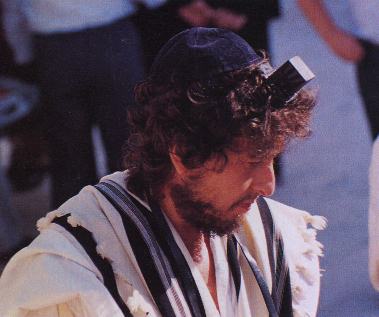
Music has always been a vital part of my life—a way to express my mood or navigate my feelings at any given time. While I appreciate the wordless genius of John Coltrane and Duke Ellington, I’ve always been drawn to lyrics. I grew up on a steady diet of Bob Dylan, Simon and Garfunkel, The Beatles, and Elton John.
The Backdrop of Brooklyn
I was born in 1966 in Brooklyn, New York, arriving smack in the middle of one of the most influential decades of the 20th Century. It was a time of assassinations and the “Police Action” in Vietnam; a era defined by both intense hatred and profound love. Bras were burned, and rock-n-roll finally grew up, sporting both an American twang and a British accent.
I often think about the weight of that era—the knowledge that once you turned 18, you could be drafted. That reality ripened a spirit of rebellion. The war in Vietnam was a conflict the American people didn’t rally around, and the kids sent to fight were rarely celebrated as they should have been. It wasn’t the war they chose, but they went out of an obligation to serve.
With all that anxiety in the air while I was learning to walk and talk, it’s no wonder my generation feels the sting of anxiety and depression today. It was instilled in us along with our bottled milk. Yet, there were miracles, too: the Equal Rights Amendment, the moon landing, and the “Miracle Mets” of 1969.
A Scratch on the Vinyl
In my house, the gateway to music was my oldest brother, Maurice. He owned the record player and unwittingly shaped our musical tastes. He let me use the turntable on one condition: never touch the disc itself, lest I scratch the vinyl and cause a skip.
Three albums lived on that turntable: Bringing It All Back Home (Side A), Bridge Over Troubled Water (Side B), and Sgt. Pepper’s Lonely Hearts Club Band (Side A). I learned every word and every musical twist. Unlike the others, the Dylan album didn’t have lyrics on the sleeve—instead, it had a sprawling, poetic write-up by Dylan himself. I used to spend hours reading his prose, which I’ve since realized was a surrealist manifesto that perfectly captured the chaos of the time.
I remember Side A starting with Subterranean Homesick Blues and ending with Bob Dylan’s 115th Dream. I still expect to hear the scratches from that original vinyl. For instance, during “115th Dream,” Dylan sings:
“I was riding on the Mayflower, When I thought I spied some land, I yelled for Captain Arab, Arab, Arab, Arab, Arab, Arab—I’ll have you understand…”
On our record, every “Arab” after the first was one too many because of a deep scratch. My brother blamed me, and whether I was guilty or not didn’t matter—the music was already my outlet and my cathartic therapy. Today, I carry those same songs on my iPod. What once required boxes of CDs and LPs now fits in the palm of my hand. Sorry, Jon Bon Jovi—it’s a convenience I’m grateful for.
The Neighborhood Bully
Dylan had some “off” years for me in the late 70s and early 80s, but then he released Infidels. It was an album steeped in religion, loneliness, and his uncanny ability to foresee problems before they occurred. He sang about unions and how greed got in the way, and he warned us about the nature of peace:
“Well, he catch you when you’re hoping for a glimpse of the sun / Catch you when your troubles feel like they weigh a ton / He could be standing next to you / The person that you’d notice least / I hear that sometimes Satan comes as a man of peace.”
My favorite from that era remains “Neighborhood Bully,” a blunt take on the persecution of the Jewish people and the state of Israel:
“Every empire that’s enslaved him is gone / Egypt and Rome, even the great Babylon / He’s made a garden of paradise in the desert sand / In bed with nobody, under no one’s command / He’s the neighborhood bully.”
Soundtrack of a Lifetime
Dylan’s music has anchored my most personal moments. My divorce in 1993 had Blood on the Tracks as its backdrop, specifically Simple Twist of Fate:
“People tell me it’s a sin / To know and feel too much within / I still believe she was my twin, but I lost the ring / She was born in Spring and I was born too late / Blame it on a Simple Twist of Fate.”
Years later, “To Make You Feel My Love” from Time Out of Mind unexpectedly became the soundtrack to my second proposal. Then came September 11, 2001. I picked up Love and Theft just as the ashes from the Twin Towers were raining down on Brooklyn. The lyrics to “High Water (for Charley Patton)” felt hauntingly literal:
“High water risin’, six inches ’bove my head / Coffins droppin’ in the street / Like balloons made out of lead.”
Stubbornly Myself
I’ve made choices in my life that were unpopular. I’ve been looked at as if I were out of my mind or simple-minded at best. But I’ve never really cared what others thought of my decisions. I walk, write, and sing the way I do because that is who I am. As Dylan put it on “Up to Me,” an outtake from Blood on the Tracks.
“If I’d lived my life by what others were thinkin’, the heart inside me would’ve died / I was just too stubborn to ever be governed by enforced insanity / Someone had to reach for the risin’ star, I guess it was up to me.”
So many songs, so many events. Dylan’s words have been my pulse through the days and nights. I could go on for pages, but I’ll spare you—for now.

 Freddy Zalta